Chapter One
Less Sail, More Speed
Rocky didn’t text me—he texted his team from somewhere else in the world. At 2:07 a.m., “Any updates?” At 3:11, “Let’s regroup at the 8 a.m. meeting.” Messages and emails stacked like snow on a roof just before the cave-in. Two years earlier his tech company looked like a rocket ship; now it felt like a shopping cart with a wobbly wheel. Layoffs, culture drift, customers churning. He believed—as many leaders do—that the answer was more: more meetings, more reviews, more of Rocky. He carried the company on his back and, not surprisingly, his back gave out. This is the trap: When you become the hero, the team becomes the audience. He didn’t need a better calendar. He needed to stop being the bottleneck and start building a real team.
Eddie didn’t fly much but also didn’t get home for dinner. He lived at the office. Twenty-plus hours a day, fluorescent lights, takeout boxes breeding in the corners. Eddie was earnest, ambitious, relentless—and everywhere, which meant he was nowhere for very long. His team learned there was only one dependable priority: whatever Eddie had just learned overnight. It wasn’t malice; it was momentum without rest or focus. They were tired of sprinting after gusts of wind.
Lee came into a healthcare empire with an impeccable résumé and a reflex that had served well in every prior role: grab the wheel. Lee second-guessed the leadership team, reworked slide decks at midnight, edited marketing copy mid-flight, and jumped into facilitation exercises I was running—not to collaborate, but to control. The team didn’t feel trusted. They felt scrutinized. One by one, they disengaged. The company didn’t fail. It just bled talent and momentum for years, because the CEO couldn’t let go of the eighth-grade habit of doing everyone’s group project.
Thomas was pushing seventy and still showed up at the plant every morning. He’d built a company everyone loved, with a product born from his brilliant design instinct—sketch an idea at breakfast, model it by lunch, first units by dinner. But his hands-on ownership of every detail became a cage. Nothing shipped without his initials. Every stalled problem got routed to Thomas first. Succession lived on a sticky note next to the espresso machine. He wanted to retire by seventy. It took seven more years, and the exit price was a fraction of what it could have been. The habits that built the company were the same ones that trapped him inside it.
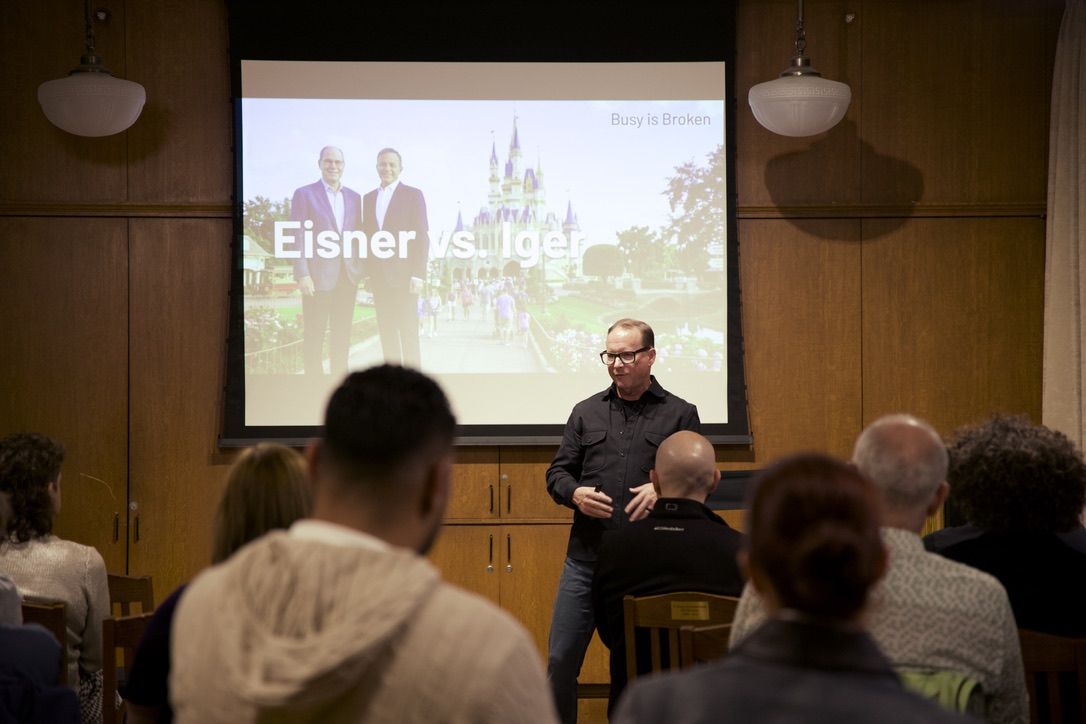
Michael Eisner and Bob Iger are a study in leadership contrasts. One was dominant and decisive; the other, a conductor, bringing out the best in others and making long-arc bets with partners who felt respected. One lived at work around the clock while the other had time for fitness, family dinners, and sailing. You can lead by tightening your grip or by widening your circle. The first scales your effort; the second scales your organization. The difference shows up on balance sheets, sure—but more importantly in the daily experience of the people doing the work. You can feel the air in a room that’s held too tightly. You can feel the trust in a room where people are invited to play their parts.
Gwynne Shotwell reminds me of a different kind of power: steady, operational, insistently excellent. I’ve never met a launch calendar that responds to swagger. Physics doesn’t care how busy you are. The only path is designing a team that can be counted on under stress. You don’t launch rockets with heroics; you launch rockets with a great team. That’s what it looks like when you build something truly big without sacrificing your soul or every weekend.
Michel Kripalani worked 360 days a year for over two decades. He built Oceanhouse Media into a beloved brand—Dr. Seuss apps, millions of downloads, the kind of company that makes parents grateful and kids happy. He was proud of what he’d built. He was also present for almost none of his own life outside of it. When his father died, Michel realized the man had spent his final years wishing his son would slow down. That was the crack in the wall. What followed was a complete redesign—of the business, of Michel’s role in it, and eventually of what success meant to him. He didn’t become less ambitious. He became a different kind of leader: the owner, not the operator.
Larry, a client from the “essential” side of business—companies that win on operational excellence rather than flash—grew a services company into an emerging leader by doing five boring things better than anyone else: clear priorities, explicit accountability, a weekly operating rhythm, dashboards, and a culture where feedback was a gift, not a threat. He learned to leave the office for family time. The company did not crumble; it improved. When he took vacations, revenue still climbed because the team executed without new ideas landing in the middle like lawn darts. Essential doesn’t mean small; it means foundational—and foundations are how you go tall without cracking.
Tony doesn’t run an empire—yet. He’s building toward a hundred units, and he’s doing it without the martyrdom that usually gets romanticized. He picks a few things that matter, finds the who for the how, then gets out of their way. He shows up for the culture— the stories, the symbols, the standards—and he refuses to be the only one who can fix a problem. He’s proof that ambition doesn’t have to smell like burnout.
And me? I learned the most important lesson about speed on a small sailboat in a very windy bay. We were beating upwind on San Francisco Bay in a building westerly—the kind of breeze that accelerates through the Golden Gate and turns the slot into a wind tunnel. The boat was overpowered and rounding up, bow hunting into the wind every few seconds, speed surging and dropping, the tiller loaded so hard I was fighting it with both hands. Rigging straining, crew bracing, hull dragging sideways instead of slicing forward. Everyone kept telling me to do more. Hike out harder. Get more weight on the rail. Sheet in and power through it. Then an older skipper next to me said, “Put in a reef.” We reduced sail. The boat flattened, the helm went neutral, and we locked into a clean groove. Less canvas, more speed. The opposite of heroic. Just a balanced boat sailing at the fastest speed it could actually sustain.
That’s what this book is about. Less force, more flow. Read the wind—your customers and market. Trim to what’s real. Reef early so the boat stays light. Recruit adults (people who don’t need babysitting), and trust your crew. Trade swagger for steady rhythms and a simple logbook. When you do, the noise drops and the miles click by. It feels almost unfair—until you realize this is how nature has always worked. If you’ve been gripping the lines with white knuckles, this is permission to loosen your grip. You’ll go farther. Fewer heroics and more teamwork.
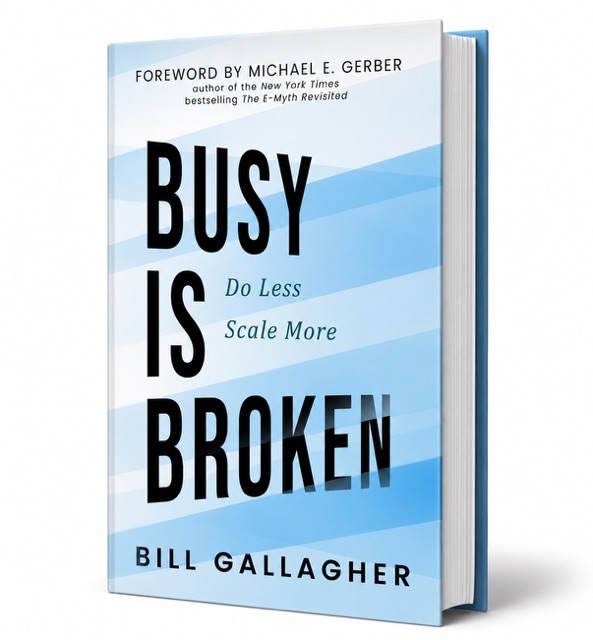
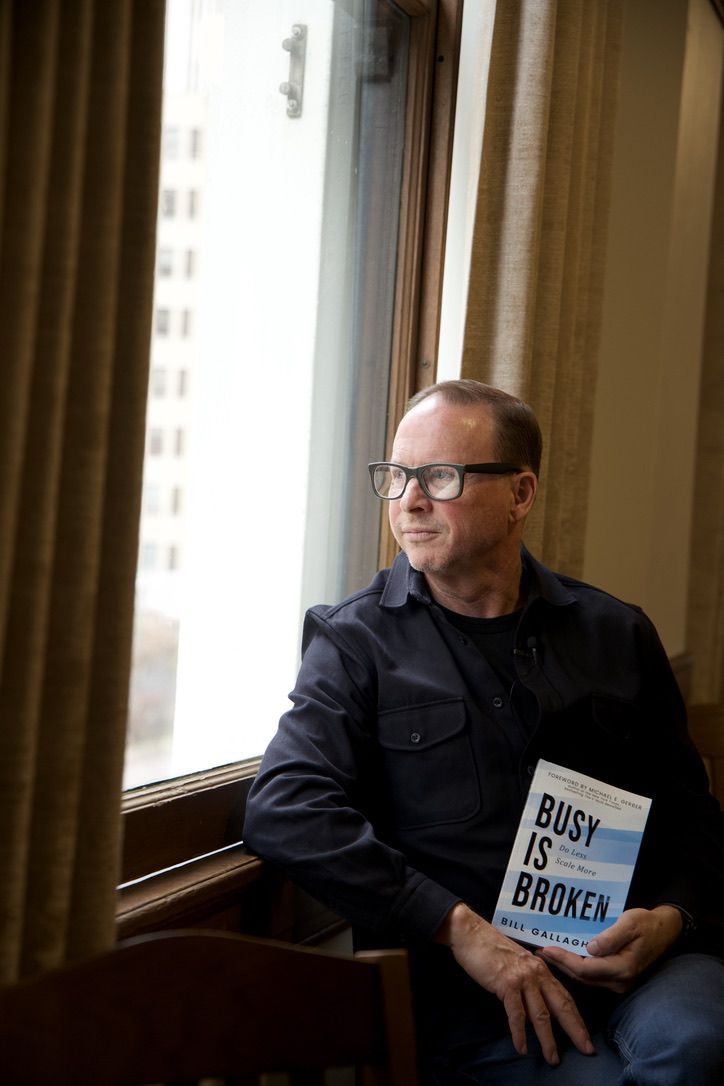
Busy Is Broken
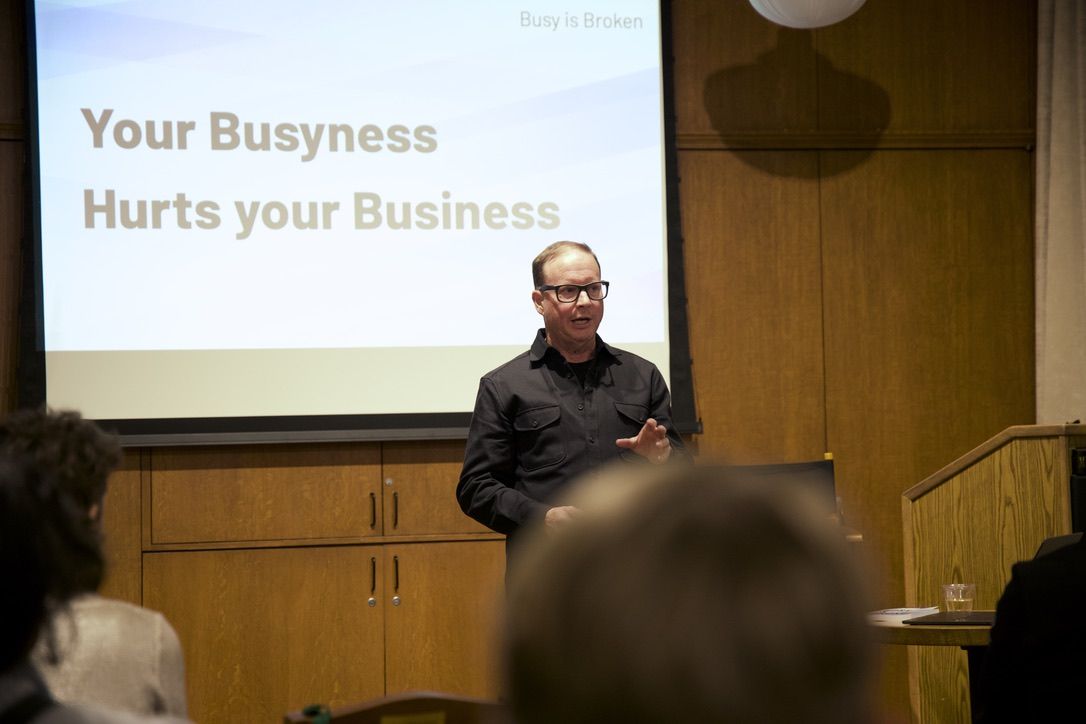
We love the rush of doing because doing feels like progress. We can see it. We can count emails, meetings, and hours worked. What we can’t always see is friction: the half-day lost waiting for an approval, the slow bleed of unclear roles, the cognitive tax of shifting priorities every Tuesday, the way an exhausted leader lowers the bar for everyone because “this week is crazy.” If you don’t design for ease, you will default to effort. Effort is noble; design wins.
I’ve sat with founders who think, “I’m afraid if I slow down, this all stops working.” I hear that fear. But what if the opposite is true? What if your own effort is the thing keeping your company slow? When all roads run through you, your personal calendar becomes the map of the business. That map is always smaller than it needs to be.
Some leaders grab more control as they grow. Others learn to let go. Eisner and Iger. Rocky and Tony. Eddie and Larry. Shotwell building cadence instead of relying on charisma. Michel learning the hard way that “I am the business” is a trap. Different people, same fork in the road: Are you building something that needs you in every room, or something that works when you’re not there?
If you’re reading this, there’s a good chance you’ve already outrun some of your peers. You built something real. People depend on you. You can push things into existence that other people can only whiteboard. But maybe now growth feels heavier than it should. Your days have condensed into a blur of decisions, and you’re not sure whether you’re leading a company or putting out a hundred tiny fires.
I wrote this book because “work harder” is a poor strategy once you’re past the first hill. The hustle mindset can get you off the ground, but it will not get you into orbit. Past a certain point, effort scales linearly and complexity scales exponentially. The math stops working. You don’t need a personal upgrade; you need an organizational one.
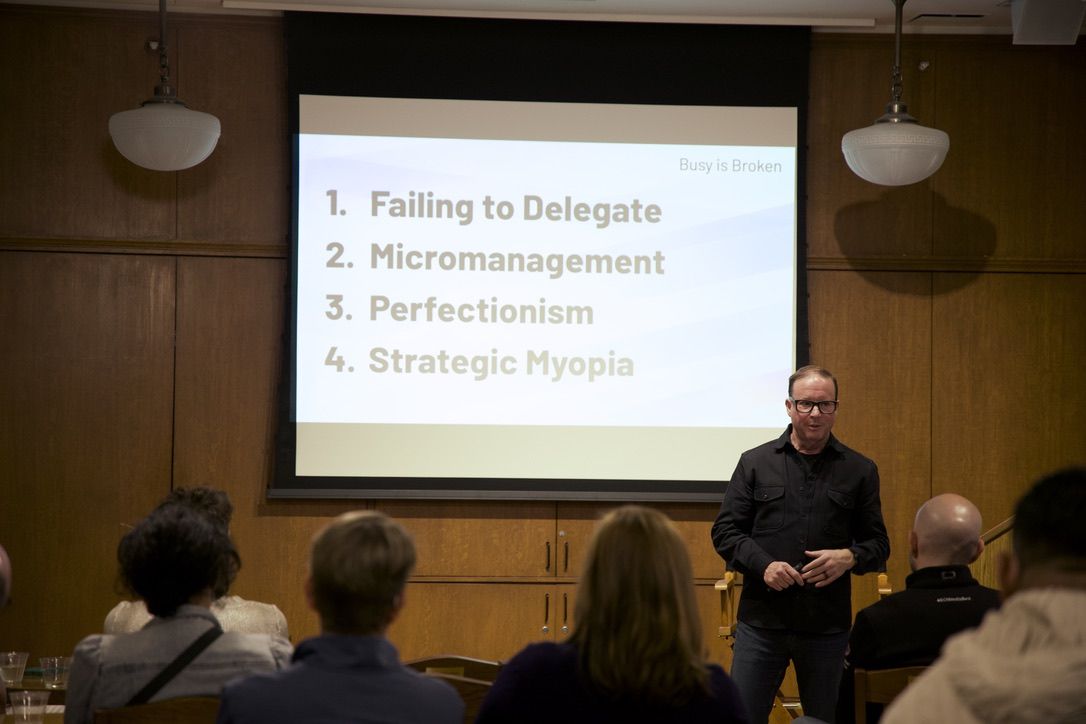
This book will help you make three shifts. The first is from micromanagement to empowerment and delegation. You don’t scale by being in every decision; you scale by making it easy for capable people to decide without you. When all roads run through you, your calendar becomes the company’s speed limit. The second shift is from trying to be the superhero to self-awareness and personal strengths. The company doesn’t need a perfect you; it needs the best of you—the work only you should do—with the rest reassigned on purpose. The third is from always-on to rest, recovery, and balance. Exhaustion is not a sustainable business model. Brains do their best work in cycles, not marathons. We’ll trade hustle for rhythm, cap work-in-progress so nothing drags forever, and put health and family on the calendar first, not last.
Along the way you’ll meet contrasts that make the point sharper. You’ll see how Bob Iger brought people along for big bets while Eisner held the reins so tight the organization froze up. You’ll feel why Gwynne Shotwell builds cadence so her team can ship rockets on time without burning out. You’ll meet Tony, deliberately building toward a hundred units by scaling culture and trust instead of himself, and Larry, who treats operational discipline like a love language. You’ll learn from Rocky, Eddie, Lee, and Thomas—leaders with huge talent, caught for a time in the gravity well of more, more, more. And you’ll meet Michel, who lost decades to the grind before a death in the family cracked his world open and forced him to rebuild everything.
Who This Is For
Founders, CEOs, and leaders in the messy middle market—the part of the journey where your old tricks are still impressive but increasingly insufficient. If you’re past that range, the patterns still apply. If you’re earlier, this can save you some scar tissue.
How To Use This Book
Don’t read it like a novel. Use it like a playbook. Each chapter pairs a story with a tool or a set of actions. There are exercises you can run with your team: a visioning exercise to recenter where you’re going, a brutally short strategy test, a strengths inventory with the blind spots that come with those strengths, a feedback loop that’s fast and kind, and a habit reset that replaces willpower with design. Take one chapter a week into your leadership meeting. Install one mechanism at a time. You’ll be tempted to do five; do one and make it stick.
What this book will not do: It won’t glorify grind or sell you a silver bullet. It won’t ask you to become someone you’re not. I like ambitious people. I coach them. I am one. We’re not throwing out drive; we’re aiming it.
What it will do: It will help you see the system you’re operating, not just the work you’re doing. It will give you words and frameworks your team can repeat without you in the room. It will lower the temperature while raising the standard. It will show you how to make progress feel light again.
Before you turn the page, try a quick diagnostic. If you disappeared for a month, what would break? What are the three priorities that would make the next twelve months a success—and which equally-important-looking projects will you consciously not do? Who has the right to say yes and who has the right to say no on your top decisions? What meetings on your calendar produce decisions and learning—and which ones merely produce updates? Where do people go to tell the truth when something slips?
If those questions feel uncomfortable, that’s not a failure of effort. It’s an invitation to design. And remember the sailboat: Sometimes you go faster by reefing down until the helm balances and the boat holds its own course.
Here’s the promise, and I mean it: You can build something big without burning out yourself or your people. You can grow without churn, unblock bottlenecks without being the unblocker-in-chief, and raise your ambitions while lowering the drama. You can be the kind of leader who gets more spacious as the company grows.
The pages ahead will help you build new patterns. We’ll subtract before we add. We’ll choose tempo over intensity, clarity over charisma, and systems over saviors to create less force, more flow.
Let’s build that.